Introduction: Anti-Aging Starts with Skin Health—and Whole-Body Wellness
Your skin is a living, breathing organ that reflects what you put on it—and what you put into your body. If you’re a health-conscious beauty enthusiast, choosing products with evidence-informed, naturally derived ingredients is a smart way to support collagen, elasticity, hydration, and a radiant complexion without harsh additives. This guide highlights 10 natural ingredients to look for in anti-aging skincare and explains how to pair topical routines with wellness habits that nourish skin from the inside out.
How to Use This Guide
For each ingredient, you’ll find what it does, how to use it, and label tips. Everyone’s skin is unique, so patch test new products, introduce one active at a time, and protect your investment with daily broad-spectrum SPF.
The Top 10 Natural Ingredients for Youthful, Resilient Skin
1) Vitamin C (L‑Ascorbic Acid or Stable Derivatives)
What it does: Brightens dullness, helps even tone, and supports collagen synthesis while defending against environmental stressors. Look for L-ascorbic acid (effective but best in opaque, air-restrictive packaging) or stable forms like sodium ascorbyl phosphate and tetrahexyldecyl ascorbate.
How to use: Apply in the morning under SPF to help neutralize daily oxidative stress. Sensitive skin? Start with low concentrations a few times per week.
Label tips: Seek 10–20% L‑ascorbic acid or lower doses of stable derivatives if you’re sensitive; pH around 3–4 improves efficacy for pure L‑ascorbic acid.
2) Niacinamide (Vitamin B3)
What it does: A barrier-building multitasker that can reduce the look of fine lines, uneven tone, and enlarged pores while enhancing resilience.
How to use: Plays well with most actives (vitamin C, hyaluronic acid). Daily use at 2–5% is well tolerated for most skin types.
Label tips: Products listing “niacinamide” in the first half of the ingredient deck typically deliver meaningful levels.
3) Hyaluronic Acid
What it does: A naturally occurring humectant that draws water into the skin for a smoother, plumper appearance. Multi-weight formulas hydrate at different layers of the stratum corneum.
How to use: Apply to slightly damp skin and seal with a moisturizer or facial oil to prevent transepidermal water loss.
Label tips: Look for “sodium hyaluronate,” “hydrolyzed HA,” or “sodium acetylated hyaluronate” for varied molecular weights.
4) Squalane (Plant-Derived)
What it does: A lightweight, non-comedogenic emollient that mimics skin’s natural lipids to soften fine lines and support a supple glow without greasiness.
How to use: Layer a few drops over serums or mix into moisturizer, morning or night.
Label tips: Seek sustainably sourced sugarcane or olive-derived squalane.
5) Ceramides
What it does: Bioidentical lipids that fortify the skin barrier, reduce dryness, and enhance elasticity—crucial as natural ceramide levels decline with age.
How to use: Ideal in moisturizers, especially if you use exfoliants or retinoids elsewhere in your routine.
Label tips: “Ceramide NP,” “Ceramide AP,” and “Ceramide EOP” signal a robust blend. Cholesterol and fatty acids amplify barrier support.
6) Bakuchiol
What it does: A plant-derived retinol alternative from Psoralea corylifolia that can visibly smooth texture and photodamage with generally less irritation than traditional retinoids.
How to use: Start 3–4 nights per week and build up. Always pair with daytime SPF.
Label tips: Look for stand-alone serums or moisturizers highlighting standardized bakuchiol extract.
7) Green Tea Polyphenols (EGCG)
What it does: Potent botanical antioxidants that help counteract environmental aggressors and visibly calm redness, supporting a more even, youthful look.
How to use: Morning or evening, especially if your skin is reactive or you live in an urban, high-exposure environment.
Label tips: “Camellia sinensis leaf extract,” “EGCG,” or “green tea catechins.”
8) Coenzyme Q10 (Ubiquinone)
What it does: A naturally occurring coenzyme that supports cellular energy while helping defend against photoaging; often used to soften the look of fine lines.
How to use: Layer under moisturizer; pairs well with vitamin C and sunscreen in the morning.
Label tips: Listed as “ubiquinone.” Liposomal or nanolipid formats may enhance delivery.
9) Centella Asiatica (Cica)
What it does: A time-honored botanical rich in asiaticoside and madecassoside that soothes, supports barrier recovery, and can complement collagen-stimulating routines.
How to use: Great for sensitive or over-exfoliated skin and as a buffer when introducing stronger actives.
Label tips: “Centella asiatica extract,” “madecassoside,” or “asiatic acid.”
10) Rosehip Seed Oil
What it does: Naturally rich in essential fatty acids and provitamin A compounds that support tone, texture, and a dewy finish while minimizing the appearance of photoaging.
How to use: Massage a few drops into damp skin as the final step at night to seal hydration and support barrier lipids.
Label tips: “Rosa canina fruit oil” or “Rosa rubiginosa seed oil.” Cold-pressed, unrefined options retain more phytonutrients.
Smart Label Reading and Layering Tips
- Prioritize concentration and packaging. Air- and light-sensitive actives (like L‑ascorbic acid) perform best in opaque, airless pumps.
- Build a routine around your goals. For brightening: vitamin C + niacinamide. For barrier support: ceramides + squalane + hyaluronic acid. For texture: bakuchiol + gentle exfoliation (2–3x weekly).
- Mind your skin’s pH. Low-pH vitamin C serums may tingle; buffer with a ceramide moisturizer if needed.
- Introduce actives slowly. Patch test, then add one new ingredient every 2 weeks to evaluate results.
- SPF is non-negotiable. Even the best actives can’t outpace daily UV exposure.
From the Inside Out: Hydration and Nutrient Support for Skin Longevity
Topicals do the heavy lifting at the surface, while internal hydration and micronutrients support the foundation—circulation, antioxidant capacity, and cellular repair. If you’re exploring add-ons that complement a clean skincare routine, select options that align with your wellness goals and skin needs.
- Replenish hydration: Adequate fluids help maintain skin turgor and glow. For times you’re dehydrated from travel, intense training, or heat, consider Hydration IV Therapy, which delivers fluids and electrolytes that support overall hydration status—key for dewy, comfortable skin.
- Antioxidant synergy with vitamin C: Pair your morning vitamin C serum with targeted internal support when appropriate. High Dose Vitamin C IV Therapy focuses on antioxidant defense and immune support, a helpful complement to topical brightening routines.
- Glow from within: If your skincare goals center on radiance and collagen support, Cosmetic IV Therapy is formulated with vitamins, minerals, amino acids, and glutathione to help counter oxidative stress—one of the root drivers of visible aging.
- Cellular energy support: Healthy-looking skin reflects healthy cells. For those exploring advanced wellness approaches, NAD+ IV Therapy focuses on cellular energy metabolism—a foundational pillar for recovery and vitality that pairs well with topical CoQ10 and barrier-focused routines.
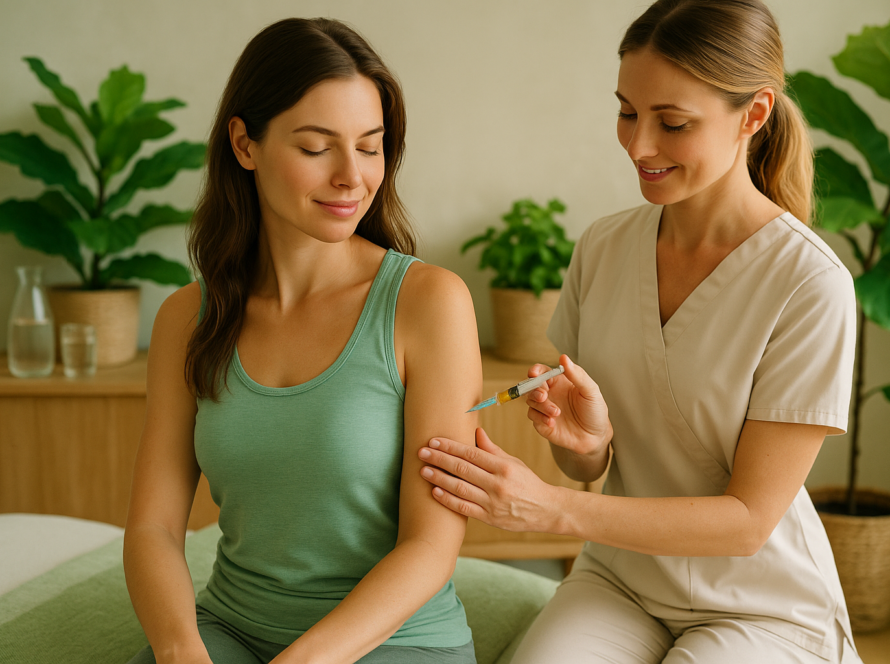
- Master antioxidant focus: When discoloration or post‑sun dullness is your concern, glutathione is a well-known intracellular antioxidant. A simple add-on like the Glutathione Injection may complement a brightening regimen built around vitamin C, niacinamide, and green tea.
As always, consult your healthcare provider to determine what is appropriate for your health history and current routine.
Design Your Routine: A Simple, Skin-Friendly Blueprint
- AM Cleanse: Gentle cleanser, then pat dry.
- Treat: Vitamin C serum + niacinamide for brightening and resilience.
- Hydrate: Hyaluronic acid on damp skin; seal with a ceramide moisturizer and a few drops of squalane as needed.
- Protect: Broad-spectrum SPF 30+ every single day.
- PM Restore: After cleansing, use bakuchiol or alternate-night exfoliation (if tolerated), then moisturize and finish with rosehip seed oil.
- Soothe as needed: Layer in cica and green tea when skin feels reactive; add CoQ10 in the morning under sunscreen.
Conclusion: Thoughtful Choices, Lasting Results
Anti-aging skincare doesn’t have to be complicated. Focus on time-tested, naturally derived ingredients—vitamin C, niacinamide, hyaluronic acid, squalane, ceramides, bakuchiol, green tea, CoQ10, cica, and rosehip seed oil—then support your skin’s inner ecosystem with hydration, nutrient-dense foods, physical activity, and restorative practices. If you’d like to complement your topical routine with targeted wellness support, options like Hydration IV Therapy, High Dose Vitamin C IV Therapy, Cosmetic IV Therapy, NAD+ IV Therapy, and the Glutathione Injection can fit naturally into a holistic approach. Thoughtful, consistent care—both on your skin and within your wellness routine—pays the best long-term dividends for youthful, healthy-looking skin.