“Detox” gets tossed around a lot in wellness, but true detoxification isn’t a three-day cleanse — it’s a 24/7 operation orchestrated by your liver, kidneys, skin, lungs, and lymphatic system. Infrared sauna sessions can be a smart adjunct to that built-in machinery. In this primer, we’ll cut through the noise, explain how infrared heat supports the body’s natural detox pathways, and share skin-specific strategies that help you glow without compromising your barrier. You’ll also find hydration and nutrient-support options used by many wellness enthusiasts to recover wisely.
Detoxification 101: What Your Body Actually Does
Detoxification is the process of transforming and clearing compounds your body doesn’t need — from metabolic byproducts to environmental exposures. The liver does most of the heavy lifting through two phases of enzymatic activity. In Phase I, compounds are prepared for removal; in Phase II, they’re bound (conjugated) to molecules such as glutathione, sulfate, or glycine, making them easier to excrete via bile and urine. The kidneys filter water-soluble waste; the gut helps escort bile-bound compounds out; the lungs eliminate volatile byproducts; and your skin supports elimination through sweat.
Key point: Infrared sauna use doesn’t “replace” liver and kidney function. Instead, by increasing circulation, promoting sweat, and supporting relaxation, it can complement the body’s built-in systems and may help mobilize and excrete small amounts of certain substances while encouraging recovery.
How Infrared Saunas Support Natural Detox Pathways
1) Deep, Gentle Heating and Better Circulation
Infrared wavelengths warm tissues more directly than traditional convective heat. As your core temperature gently rises, blood vessels dilate and blood flow increases. This can enhance the delivery of oxygen and nutrients to working organs — including the liver and skin — while helping shuttle metabolic byproducts to routes of elimination.
2) Sweating as a Secondary Elimination Route
Sweat primarily helps regulate temperature, but it can also carry trace amounts of water-soluble compounds. Regular infrared sessions encourage a consistent sweat response, adding an extra (though modest) pathway for offloading substances your body is already processing. Think of it as opening an additional lane on a highway your detox organs already patrol.
3) Heat Shock Proteins and Cellular Housekeeping
Heat exposure stimulates protective molecules called heat shock proteins. These chaperones help refold misfolded proteins and support cellular housekeeping. Over time, that cellular “tidying up” contributes to resilience — an important backdrop for healthy detox function.
4) Lymphatic Movement and Recovery
Because lymph fluid moves in response to muscle activity and changes in circulation, the vasodilation and relaxed muscular tone during a sauna can assist gentle lymph movement. Paired with light movement (like a short walk) after your session and strategic hydration, this can help your body clear what it no longer needs.
Skin Health Benefits That Go Beyond the Sweat
Microcirculation and Nutrient Delivery
Improved blood flow means more oxygen and micronutrients reach the skin. Over time, that can support a brighter, healthier-looking complexion and a more efficient turnover of skin cells.
Pores, Clarity, and Calm
Warmth softens sebum and helps loosen debris in pores, which you can then gently remove during your post-sauna cleanse. Many people notice fewer congested areas and a smoother texture when they pair consistent sauna use with a solid skincare routine.
Barrier Support — If You Finish Strong
Heat can temporarily increase transepidermal water loss (TEWL), so what you do after the sauna matters. Replenish fluids, cleanse with a mild, pH-balanced wash, apply a hydrating toner or essence, and seal with a ceramide-rich moisturizer to lock moisture in. Think “sweat, wash, rehydrate, seal.”
Build a Smart Infrared-Sauna Routine
- Start low, go slow: Begin with 10–15 minutes at a comfortable setting. Increase to 20–30 minutes as tolerated.
- Find your frequency: Two to four sessions per week works well for many people. Consistency beats marathon sessions.
- Hydrate with intention: Drink water before, sip during, and rehydrate afterward. Add electrolytes if you’re a heavy sweater or training hard.
- Fuel detox pathways: Prioritize protein (for amino acids used in Phase II detox), cruciferous vegetables, colorful produce, and fiber for regularity.
- Move after: A 5–10 minute easy walk post-sauna can encourage lymph movement and a gradual return to baseline.
- Skin routine: Post-session rinse, gentle cleanse, hydrating mist or serum, then a moisturizer with humectants (glycerin, hyaluronic acid) plus lipids (ceramides, squalane). Apply SPF the next morning.
- Track how you feel: Note energy, sleep, skin changes, and hydration needs. Adjust your schedule accordingly.
Hydration and Nutrient Support: When to Consider an Assist
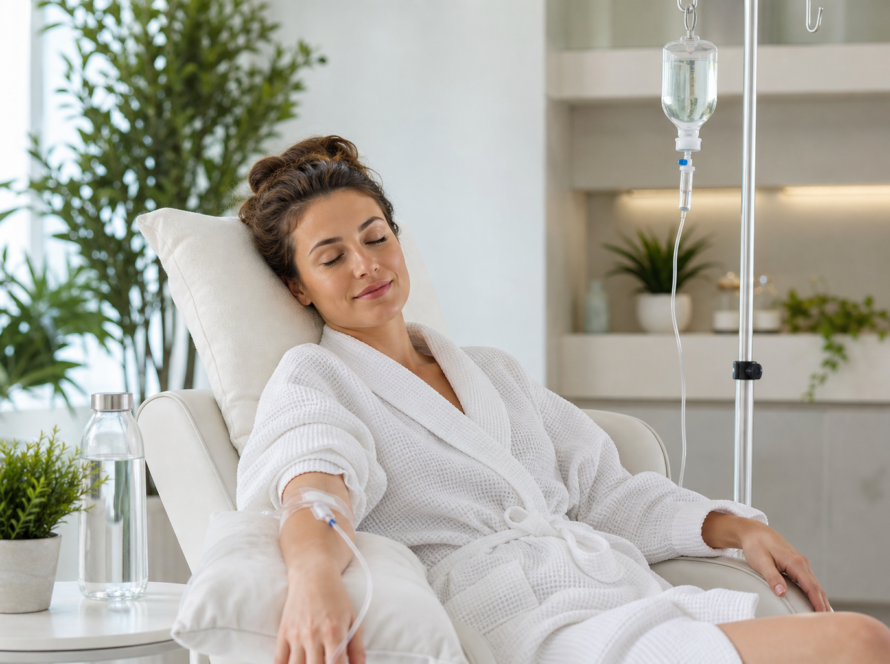
Most healthy adults can support sauna recovery with water, mineral-rich foods, and quality sleep. If your schedule is intense, you’re training hard, or you want targeted antioxidant support around higher-heat phases, some clients integrate IV therapy under medical supervision. Options that pair naturally with an infrared routine include:
- Hydration IV Therapy: Fluids plus electrolytes and vitamins can help restore balance after heavy sweat sessions and travel, supporting mental clarity and skin hydration.
- Diet & Detox IV Therapy: Designed with amino acids, minerals, and antioxidants (including glutathione) to support the body’s natural detox pathways at a cellular level.
- Cosmetic IV Therapy: Vitamin C, amino acids, minerals, and glutathione to back collagen support, defend against oxidative stress, and promote a vibrant, even-looking complexion from the inside out.
- Recovery IV Therapy: A restorative blend intended to replenish nutrients, ease fatigue, and support detoxification with targeted antioxidants.
Tip: Time your IV on a day you’re not pushing heat intensity to keep the focus either on hydration/repair or on heat adaptation — not both at once. As always, consult with a qualified provider to tailor frequency and formulas to your needs.
Safety Considerations and When to Pause
- Hydration status matters: Avoid sauna use if you’re already dehydrated, ill, or lightheaded. Replenish first.
- Medical conditions: If you have cardiovascular disease, uncontrolled hypertension, kidney disease, neuropathy, or you’re pregnant, speak with your clinician before starting. Some medications also alter heat tolerance and sweat response.
- Post-illness return: After a fever, intense GI illness, or significant fluid loss, wait until you’re fully rehydrated and cleared by a clinician.
- Listen to your body: End the session if you feel dizzy, nauseated, or unusually fatigued. Cooling down gradually is part of the practice.
Frequently Asked (Smart) Questions
Does more sweat mean more detox?
Not necessarily. Your liver and kidneys move the biggest load. Sweating is a supportive route — a helpful “assist,” not the star of the show. Quality of recovery and nutrition matter as much as minutes in the cabin.
What temperature and duration are best?
The “best” setting is the one you’ll use consistently without overtaxing your system. Moderate heat for 20–30 minutes, a few times per week, is more sustainable than rare, extreme sessions.
How can I protect my skin barrier?
Rehydrate promptly, cleanse gently, and seal moisture in with barrier-supportive lipids. If you’re acne-prone, avoid heavy occlusives pre-sauna; keep them for post-cleanse if your skin tolerates them.
Putting It All Together
Infrared sauna sessions can be a thoughtful addition to a comprehensive detox and skin-health plan. By elevating circulation, encouraging a steady sweat response, and supporting cellular resilience, they complement — not replace — what your liver and kidneys already do so well. Pair your sessions with strategic hydration, protein and phytonutrient-rich meals, barrier-loving skincare, and adequate sleep. If you’re navigating a demanding schedule or training cycle, consider targeted support like Hydration IV Therapy, or skin- and detox-focused infusions such as Cosmetic IV Therapy and Diet & Detox IV Therapy under professional guidance.
Detoxification is daily, not drastic. With consistent, balanced habits — and a smart, skin-friendly infrared routine — you can help your body do what it’s designed to do while keeping your complexion calm, clear, and resilient.